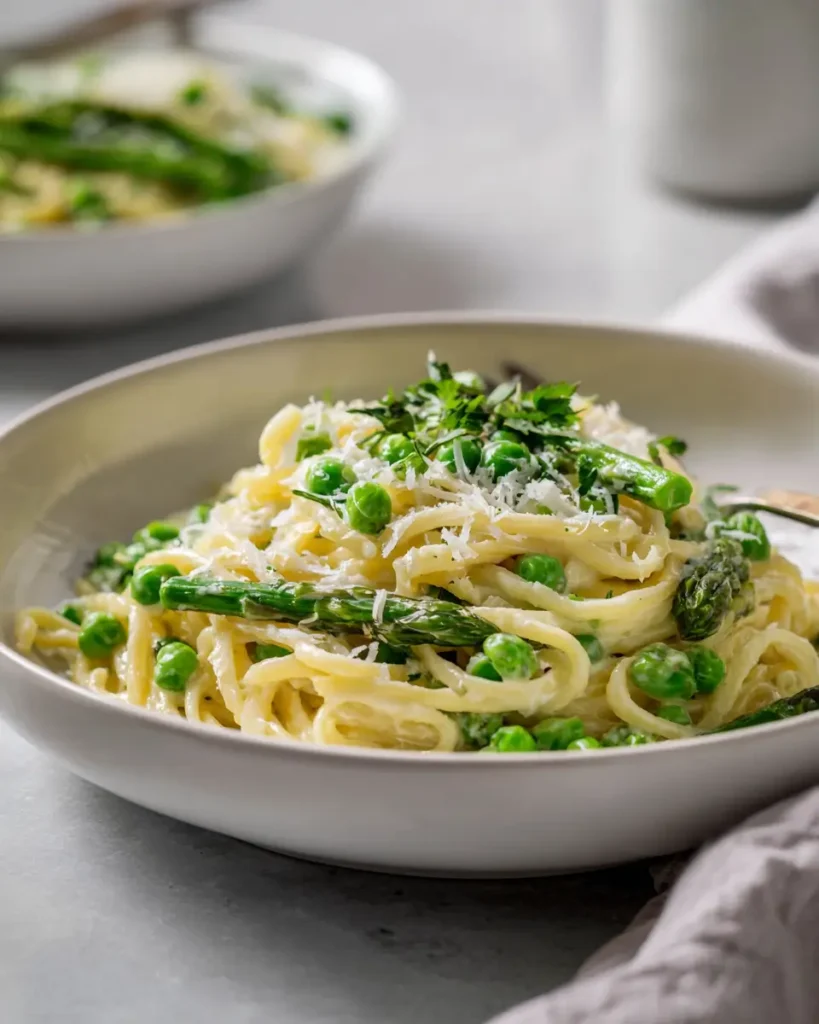
This asparagus pea pasta brings together tender greens, a light creamy sauce, and perfectly cooked pasta for a fresh, comforting meal. It’s simple enough for a weeknight yet polished enough to serve at a casual gathering, with bright flavor and a smooth finish.
What’s Cooking in This Article
Table of Contents
Asparagus Pea Pasta Basics for a Fresh Dish
A good asparagus pea pasta starts with balance. You want soft pasta, crisp-tender vegetables, and a sauce that lightly coats every bite.
Why asparagus and peas work together
Asparagus adds structure and a gentle bite, while peas bring a soft texture and subtle sweetness. Together, they create contrast without overpowering the dish. When cooked properly, both vegetables keep their color and fresh taste.
Key ingredients overview
| Ingredient | Role in the dish |
|---|---|
| Pasta | Base and structure |
| Asparagus | Fresh bite and texture |
| Peas | Soft sweetness |
| Cream or milk | Light sauce base |
| Parmesan cheese | Rich, savory finish |
This simple mix creates a smooth, balanced pasta that feels light but still satisfying.
How to Make Asparagus Pea Pasta Step by Step
This asparagus pea pasta recipe focuses on timing so everything comes together smoothly.
Cooking method
- Bring a large pot of salted water to a boil.
- Cook pasta according to package directions.
- Add chopped asparagus during the last 3 minutes of cooking.
- Add peas during the final minute.
- Reserve 1 cup of pasta water, then drain.
- In a pan, warm cream or milk over medium heat.
- Stir in grated cheese until smooth.
- Add pasta, asparagus, and peas to the sauce.
- Toss gently, adding reserved pasta water as needed.
- Season with salt and pepper, then serve.
Tips for the best texture
- Cut asparagus into even pieces for consistent cooking.
- Do not overcook peas to keep their soft texture.
- Use pasta water to adjust the sauce for a silky finish.
The final dish should look glossy and lightly coated, not heavy.
Flavor Variations for Asparagus Pea Pasta
This recipe adapts easily while keeping its fresh feel.
Easy ways to change the flavor
| Addition | Result |
|---|---|
| Lemon zest | Bright, fresh note |
| Garlic | Deeper savory flavor |
| Ricotta | Creamy, soft texture |
| Fresh basil | Light herbal finish |
Each option blends well without changing the core structure of the dish.
Make-ahead and storage tips
- Cook pasta fresh for the best texture.
- Store leftovers in the refrigerator for up to 3 days.
- Reheat gently with a splash of milk or water to loosen the sauce.
These steps help maintain a smooth consistency after reheating.
Serving Asparagus Pea Pasta with Style
Presentation plays a big role in making this dish feel complete.
What to serve alongside
- Light green salad
- Toasted bread
- Simple roasted vegetables
These sides keep the meal balanced and fresh.
Simple presentation tips
Serve the pasta in a wide bowl and finish with a light sprinkle of cheese and herbs. The soft green tones and creamy coating create a clean, inviting look with minimal effort
Related recipes
- Spring Pasta Salad Fresh Vibrant Seasonal Dish
- Air Fryer Asparagus Crisp Easy Lemon Glazed
- Classic Pea Salad Recipe with Cheddar
A quick GlazeRush kitchen note
I started GlazeRush on August 8, 2020, to share recipes that feel special without adding stress in the kitchen. While I often focus on glazed desserts and soft cakes, dishes like this asparagus pea pasta follow the same idea. I keep the method simple, the steps clear, and the results polished. Whether it’s a sweet bake or a fresh pasta, I want every recipe to feel approachable and still look like something you’d proudly serve at your table.
FAQs About Asparagus Pea Pasta
Can I use frozen peas?
Yes, frozen peas work well. Add them directly during the last minute of cooking.
What pasta shape works best?
Short pasta like penne or fusilli holds the sauce nicely, but long pasta also works.
Can I make it without cream?
Yes, use pasta water and cheese for a lighter sauce.
How do I keep asparagus from getting too soft?
Add it near the end of cooking and avoid overboiling.
Conclusion
This asparagus pea pasta delivers fresh flavor, a smooth texture, and a simple cooking process that fits any schedule. With flexible ingredients and easy steps, it’s a reliable dish you can return to again and again. It brings comfort, color, and a clean finish to your table without extra effort.
Want more recipes? Follow me on Pinterest and X!
PrintAsparagus Pea Pasta: Fresh, Creamy, and Easy to Love
This asparagus pea pasta combines tender asparagus, sweet peas, and a light creamy sauce for a fresh and comforting meal that comes together quickly.
- Prep Time: 10 minutes
- Cook Time: 20 minutes
- Total Time: 30 minutes
- Yield: 4 servings 1x
- Category: Dinner
- Method: Stovetop
- Cuisine: American
- Diet: Vegetarian
Ingredients
12 oz pasta (penne or fusilli)
1 bunch asparagus, trimmed and cut into pieces
1 cup peas (fresh or frozen)
1 cup milk or light cream
1/2 cup grated Parmesan cheese
2 tablespoons olive oil
2 cloves garlic, minced
1/2 teaspoon salt
1/4 teaspoon black pepper
Optional: lemon zest or fresh herbs
Instructions
1. Bring a large pot of salted water to a boil.
2. Cook pasta according to package directions.
3. Add asparagus during the last 3 minutes of cooking.
4. Add peas during the final minute.
5. Reserve 1 cup of pasta water, then drain.
6. Heat olive oil in a pan over medium heat.
7. Add garlic and cook briefly until fragrant.
8. Pour in milk or cream and warm gently.
9. Stir in Parmesan cheese until smooth.
10. Add pasta, asparagus, and peas to the sauce.
11. Toss gently and add pasta water as needed.
12. Season with salt and pepper and serve warm.
Notes
Cut asparagus evenly for consistent cooking.
Do not overcook peas to keep their soft texture.
Use reserved pasta water to adjust sauce consistency.
Add lemon zest for a fresh finish if desired.
Serve immediately for the best texture.
Nutrition
- Serving Size: 1 serving
- Calories: 360
- Sugar: 4g
- Sodium: 300mg
- Fat: 14g
- Saturated Fat: 5g
- Unsaturated Fat: 7g
- Trans Fat: 0g
- Carbohydrates: 45g
- Fiber: 4g
- Protein: 13g
- Cholesterol: 20mg